International cooperation and humanitarian aid are currently facing a level of contestation not seen for decades. A clear decline in funding allocated to official development assistance (ODA) directed toward countries of the Global South can be observed, particularly among Western countries and liberal democracies, historically the principal providers of development aid. According to the OECD, ODA decreased by approximately 7% in 2024 compared with 2023, and a further reduction of 9% to 17% is expected in 2025.
This contraction is occurring in countries where international cooperation had long constituted a central pillar of foreign policy and an important instrument of soft power. It is accompanied by increasingly security-oriented and nationalist political narratives that tend to delegitimise public resources devoted to cooperation. These trends raise broader questions regarding the social cohesion of liberal democracies and the ways in which their internal transformations are gradually reshaping the international order.
Long perceived as politically stable and socially cohesive, liberal democracies are now witnessing a gradual erosion of their political model. Political polarisation, declining trust in public institutions, fragmentation of public debate amplified by digital platforms, and the rise of populist movements are weakening political consensus on major issues, including international cooperation. Foreign policy is thus increasingly shaped by domestic political rivalries.
In response to these evolutions, the solutions most often proposed follow familiar lines: “doing more with less”, fostering innovation, reforming aid systems, strengthening partnerships with the private sector, or improving aid effectiveness. Several criticisms directed at international cooperation, including limited effectiveness, conditionality, risks of dependency, and potential neocolonial dynamics, are legitimate. Yet the core issue does not appear to be a global shortage of resources. The world has never been wealthier. According to estimates by UBS, global wealth increased at an estimated annual rate of 4% to 6% between 2020 and 2025. ODA amounts to roughly USD 210 to 230 billion per year, while total global wealth exceeds USD 300 trillion. Development assistance, therefore, represents approximately 0.07% of global annual wealth, a proportion that appears strikingly small.
The central question is therefore not one of resource scarcity but of allocation. In other words, it is fundamentally a political choice. Current debates often avoid confronting this central issue and instead emphasise technical solutions that may be useful but remain insufficient to address the structural causes of the problem.
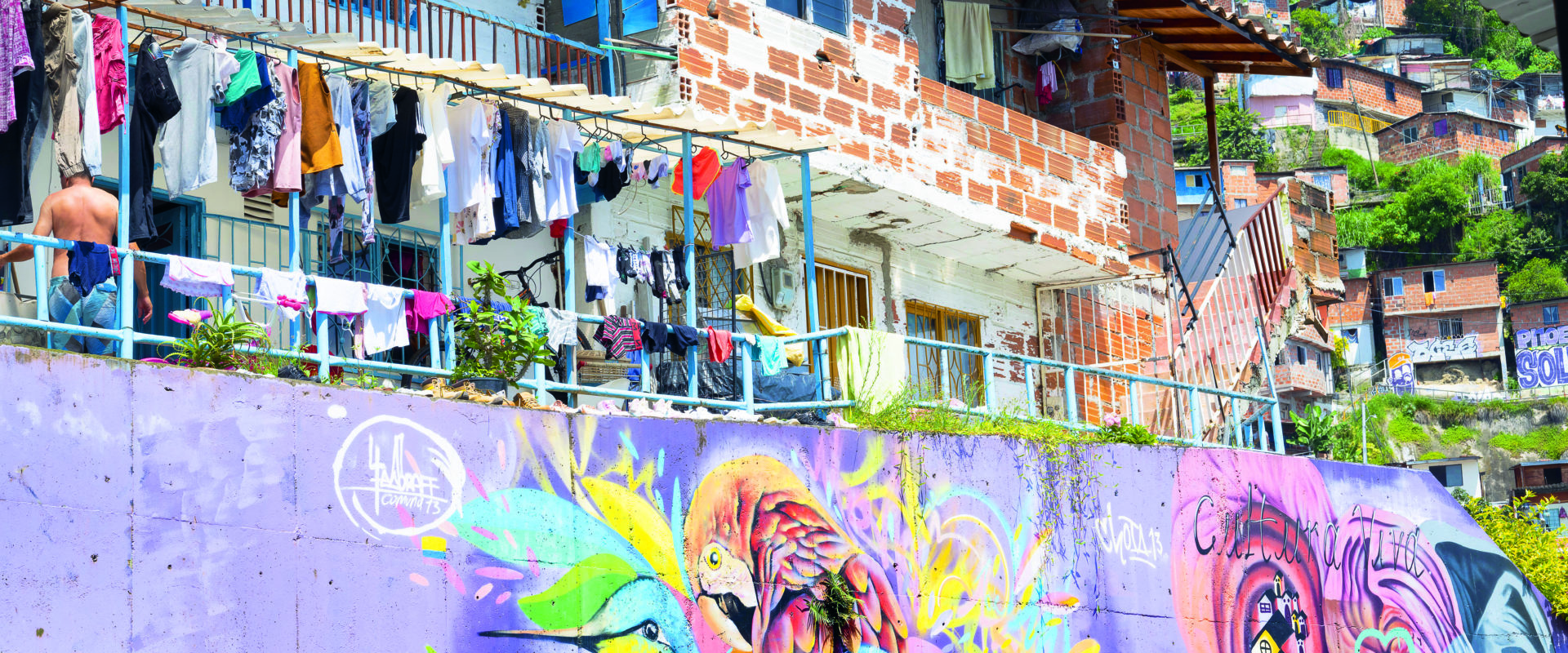
These questions raise a broader issue: whether the current moment signals the need for a new paradigm in international cooperation. If so, what form should that paradigm take? Latin America illustrates many of these tensions. In several countries across the region, the deterioration of state legitimacy has facilitated the expansion of illegal economies, strengthened criminal governance structures, and weakened institutional guarantees of rights. Drug trafficking, illegal mining, and human trafficking undermine democratic institutions and threaten social and non-governmental organisations.
At the same time, economies that remain heavily dependent on agricultural, mining, or energy exports are particularly vulnerable to the impacts of climate change, which increases the risks of rural poverty, food insecurity, and forced migration. Within the region, international cooperation represents less than 0.2% of annual GDP and approximately 7% of global aid flows. The United States Agency for International Development (USAID) has long been one of the principal bilateral donors. In 2023, it distributed USD 42 billion worldwide, including approximately 1.7 billion allocated to Latin America. Although these amounts remain relatively modest, their qualitative impact is significant, as they support strategic sectors such as human rights, gender equality, climate change, and institutional strengthening.
The gradual reduction of these resources and the withdrawal of certain donors have worrying consequences: the weakening of democratic institutions, the erosion of social organisations and NGOs, the interruption of knowledge transfer necessary for effective public policy implementation, and the worsening precarity of already vulnerable populations.
Although international cooperation can and should be improved, it remains indispensable. By contributing to the reduction of inequalities and asymmetric relationships, it fosters dialogue between societies and serves as a factor of stability and peace. For many partners in the Global South, the disappearance of development cooperation would mean the abrupt interruption of essential programmes in areas such as health, education, human rights, and environmental protection.
Defending international cooperation does not imply abandoning critical reflection. Approaches must evolve to better respond to the expectations of partners, particularly through strengthening local capacities, reforming public policies, and advancing the localisation of aid. As early as 2005, the Paris Declaration on Aid Effectiveness called for strengthening partner ownership and improving coordination among development actors. The path toward more balanced and equitable partnerships is therefore clearly outlined. However, implementing these transformations requires clarity, political courage, and sustained commitment from those who finance international cooperation.
By Alexandre Dormeier Freire, Director of the Executive Programmes in Development Policies and Practices and Senior Lecturer in the Interdisciplinary Programme; Dominique Rossier, Lecturer in Development Studies; and Maria Liliana Soler-Gómez Lutzelschwab, Director of the CAS and DAS in Gender and Development for Africa and Latin America and Lecturer in Development Studies.
This article was published in Globe #37, the Graduate Institute Review.
Photo credit: Jean-François Fort / Hans Lucas