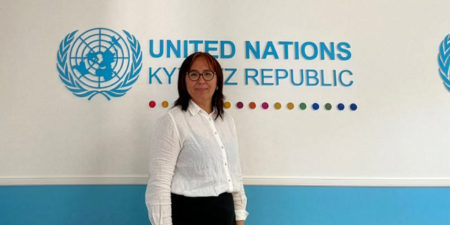
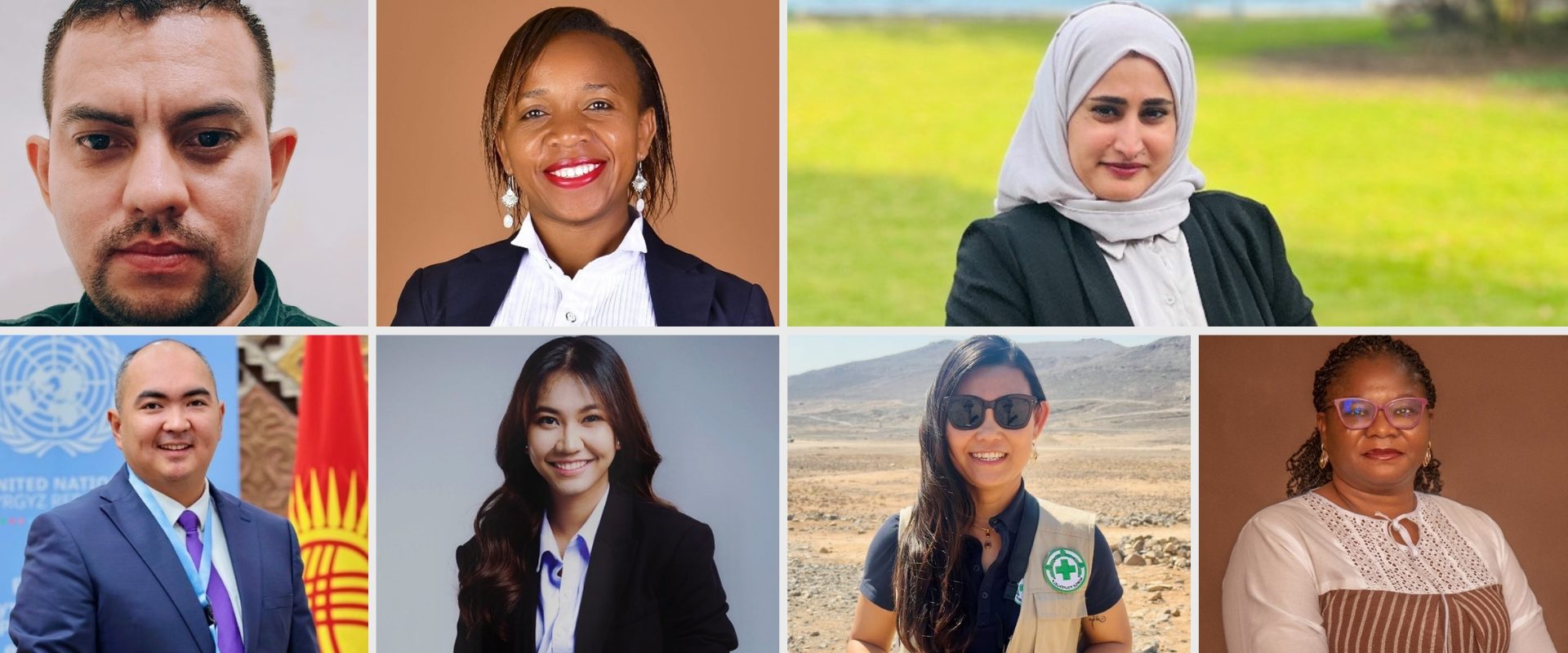
The 2025-2026 edition of the Development Policies and Practices (DPP) programme concluded in February, bringing together professionals from around the world committed to addressing today’s most pressing development challenges.” This year, seven graduates from the six regional hubs and the programme’s Conflict and Fragility Management thematic branch shared key insights from their professional theses.
Their research and professional work span diverse development and humanitarian issues across multiple regions. Areas of focus include analysing climate-related conflict risks affecting agricultural communities in Yemen; promoting inclusive conservation by integrating Indigenous knowledge systems in Cambodia; strengthening women’s leadership in humanitarian mine action in Syria; advancing youth empowerment and sexual and reproductive health and rights policy alignment in Kyrgyzstan; improving access to justice through greater awareness of alternative dispute resolution mechanisms in Kenya; fostering financial inclusion to enhance the productivity of smallholder farmers in Burkina Faso; and addressing the digital divide affecting rural women entrepreneurs in El Salvador. Together, these efforts contribute to more inclusive, evidence-based, and locally grounded approaches to sustainable development and humanitarian action.
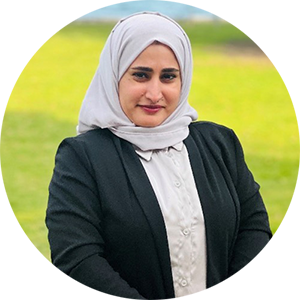
Ebtihal Saad
I work with the International Committee of the Red Cross as an Analysis and Evidence Specialist, supporting programme teams in the design and delivery of evidence-based humanitarian protection and assistance to people in conflict-affected settings, through strengthening analysis, data quality, and informed decision-making.
My thesis, “Climate-Induced Risks of Violent Conflict in Agricultural Communities in Tuban District, Lahj Governorate, Yemen”, examined how climate variability affects farmers’ livelihoods and contributes to the escalation of local conflict. It found that in fragile contexts, climate change acts as a threat multiplier, interacting with socio-economic vulnerabilities and governance gaps to fuel tensions, highlighting the need for integrated climate adaptation and accountable local institutions.
The DPP Programme significantly shaped my professional journey, strengthening both my knowledge and analytical skills. It deepened my understanding of global development challenges, policy-practice dynamics, and enhanced my proficiency in qualitative and quantitative research methods. Moreover, it connected me with a diverse international network of professionals and long-lasting friendships. Moving forward, I carry a deep sense of responsibility to apply these skills, ensuring development efforts incorporate the perspective of the vulnerable communities and promote sustainable, locally led solutions.
Sophearoth Ravy
I currently work as the Communications and Outreach manager at Conservation International Cambodia (CI Cambodia), where I lead strategic communications that connect conservation practice with public engagement, policy dialogue, and international audiences. My role focuses on translating scientific studies and field-based conservation work into accessible stories and evidence that strengthens collaboration among government partners, Indigenous communities, private sector, journalists and conservation organisations across key landscapes in Cambodia.
My thesis, “Integrating Indigenous People’s Knowledges into Conservation Approaches: A Case Study of Kuy Indigenous Communities in Prey Lang Wildlife Sanctuary, Cambodia,” explores how Indigenous knowledge-sharing pathways can be meaningfully integrated into conservation learning, communications and management approaches. The research examines how Kuy communities generate and transmit ecological knowledge and identifies practical strategies for conservation organisations to engage with these systems in a more inclusive and culturally grounded way. Following the study, I’m organising knowledge-sharing sessions with colleagues at CI Cambodia, partner NGOs, and the Kuy communities who contributed to the research. These discussions aim to translate the findings into practical actions that strengthen inclusive conservation practices, particularly in community-based conservation and REDD+ initiatives.
The DPP equipped me with stronger analytical tools and policy perspectives that I now apply in my work – bridging research, communications and practices to support more inclusive and effective conservation initiatives. Importantly, I also widened my network on both regional and international levels, connecting with professionals across diverse fields. These interactions have strengthened my confidence to lead with empathy, collaboration and quality.

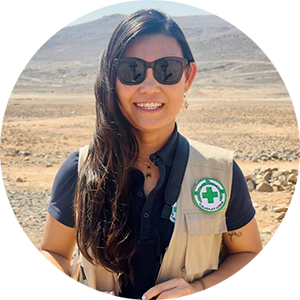
Zin Mar Lwin
I work for Norwegian People’s Aid (NPA), where I have spent more than 15 years in conflict- and war-affected countries, including Myanmar, Laos, Iraq, Bosnia and Herzegovina, and now Syria. My work focuses on the financial and programme management of multi-donor humanitarian mine action programmes, supporting the clearance of landmines, cluster munitions, IEDs, and other explosive remnants of war to enhance civilian safety and enable the safe return of displaced populations.
My thesis, “Women in Humanitarian Mine Action in Syria: Enhancing Female Leadership in Senior Roles”, explored the barriers women face in accessing leadership positions within the sector. Its objective was to identify practical pathways and organisational strategies to strengthen women’s participation and leadership, particularly in high-risk and conservative contexts.
The CFM/DPP programme at the Geneva Graduate Institute has significantly shaped my professional journey by deepening my understanding of conflict dynamics and fragility. It strengthened my analytical and strategic planning skills and broadened my global perspective, while exchanges with senior experts and peers reinforced the value of collaborative, context-sensitive leadership in fragile environments.
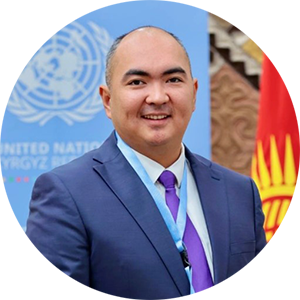
Kanat Kubatbekov
I currently work as a National Programme Analyst on Communications and Innovation at the United Nations Population Fund (UNFPA) in Bishkek, Kyrgyz Republic. In this role, I focus on strategic communications, digital engagement, and partnerships that promote youth empowerment, gender equality, and sexual and reproductive health and rights (SRHR). My work involves translating complex policy and programme results into accessible narratives through media, campaigns, and digital platforms, while also supporting innovation initiatives that strengthen outreach to young people.
My thesis is titled “Youth-Related FP2030 Commitments in Kyrgyzstan: From Global Goals to National Action.” It examines how international commitments under FP2030 are reflected in national legislation and policies. The research explores gaps between global commitments and domestic legal frameworks, particularly regarding adolescent consent, confidentiality, and access to reproductive health services. Its objective is to identify legal and institutional barriers and propose recommendations to better align national frameworks with international standards.
The Geneva Graduate Institute Development Policies and Practices (DPP) programme has significantly shaped my professional perspective. It strengthened my ability to connect global policy debates with country-level implementation, while equipping me with analytical tools to translate research into practical policy dialogue and programme design.
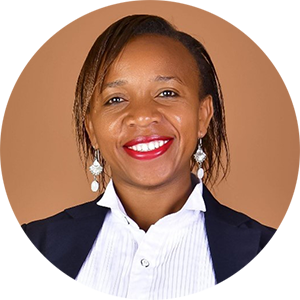
Martha Makau
I am a lawyer by profession, practising as an Advocate of the High Court of Kenya. My work focuses on Legal Representation, Research, and Drafting. My thesis focused on ensuring access to justice through increased awareness of Alternative Dispute Resolution (ADR) in Kenya. This topic explored the barriers to awareness and acceptance of Alternative dispute resolution in Kenya, despite its advantages.
The objectives of my thesis were to explore how ADR can influence access to justice compared with litigation, to assess barriers to ADR awareness and acceptance, and to understand which strategies can be adopted to raise ADR awareness. I conducted interviews with ADR practitioners in Kenya, and my findings indicate a low level of ADR awareness.
I joined the DPP programme with the aim of improving my academic capabilities, yet I emerged from it with both academic and practical skills, which positively shaped my career and my way of thinking. The programme brings together professionals from different parts of the world with different expertise, whose connections have enhanced my knowledge and Professionalism.
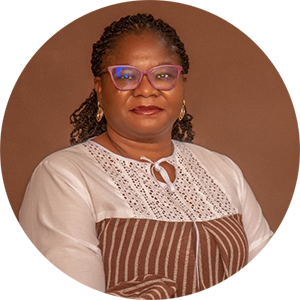
Téné Arlette Ouedraogo Tougma
Consultante en développement rural, je travaille pour le Fonds international de développement agricole (FIDA). Mes expertises portent sur le développement de chaînes de valeur agricoles durables, l’inclusion sociale, économique et financière des petits producteurs et l’intégration de pratiques agroécologiques dans les politiques et programmes agricoles. Mon mémoire DPP s’intitule : « Inclusion financière comme levier d’amélioration de la productivité des producteurs de manioc dans la région des Hauts-Bassins au Burkina Faso». Il analyse comment l’accès à des services financiers adaptés peut soutenir l’investissement agricole, faciliter l’adoption d’innovations et améliorer les rendements.
« L’homme qui a appris est comme un arbre planté près de l’eau : il grandit et porte des fruits », proverbe africain. Comme un arbre nourri, cette formation a renforcé mes connaissances, ma capacité d’analyse et ma compréhension des enjeux du développement rural. Le programme a consolidé mes compétences en analyse interdisciplinaire, en réflexion critique et en utilisation d’approches fondées sur des données probantes pour concevoir, analyser et évaluer des programmes de développement agricole et rural. À l’image de l’arbre qui porte des fruits, ces apprentissages continuent d’enrichir ma pratique professionnelle.
De plus, le DPP m’a offert l’opportunité d’échanger avec un réseau international de praticiens du développement. Les résultats de cette recherche seront utilisés dans la conception de nouveaux programmes FIDA favorisant l’inclusion financière des petits producteurs, l’investissement agricole et l’adoption d’innovations, afin de soutenir la transformation durable des systèmes agricoles.
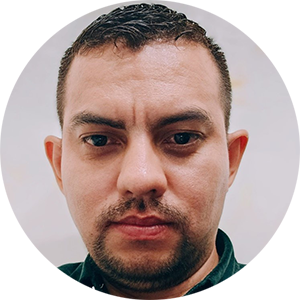
Marvin Ulises Mejia Flores
Mi nombre es Marvin Mejia, Salvadoreño y actualmente trabajando en la Asociación de Desarrollo Económico Local de Morazán (ADEL Morazán), organización privada, sin fines de lucro, apolítica y de funcionamiento participativo; cuyo objetivo consiste en contribuir al desarrollo económico productivo sustentable de las familias del territorio de intervención (principalmente en Morazán, El Salvador) para potenciar el desarrollo humano, en el marco de la estabilidad social, promovida mediante mecanismos de participación y concertación económica.
Mi trabajo se centra en la coordinación de proyectos, relacionado con la identificación de oportunidades de cooperación, diseño de propuestas o notas conceptuales, gestión de programas o proyectos de desarrollo, hasta la planificación, ejecución y monitoreo de proyectos que buscan mejorar las condiciones económicas y sociales de las comunidades y, por ende, la calidad de vida de las familias. Bajo este contexto desarrollé mi tesis denominada “Brecha digital y su relación con el desarrollo económico de las mujeres emprendedoras rurales de los distritos de Chilanga y Yamabal, en el departamento de Morazán, El Salvador”, con el objetivo de analizar la incidencia de la brecha digital en el desarrollo económico de las mujeres emprendedoras rurales de los distritos antes mencionados, mediante la identificación de las principales limitaciones y barreras en el uso de las TIC para el fortalecimiento de sus actividades económicas.
El programa DPP ha influido significativamente en mi trayectoria al fortalecer mi capacidad de análisis estratégico y mi comprensión de las políticas y prácticas de desarrollo, desde una perspectiva global aplicada al contexto territorial. Como Coordinador de Proyectos en ADEL Morazán, esta experiencia me ha permitido integrar herramientas más eficaces para la formulación, gestión y evaluación de iniciativas de desarrollo económico local, especialmente en el trabajo con MYPEs y mujeres emprendedoras. Asimismo, el intercambio con profesionales de distintos países ha ampliado mi visión sobre alianzas, sostenibilidad e incidencia, aportando mayor solidez técnica y proyección internacional a mi desempeño institucional.