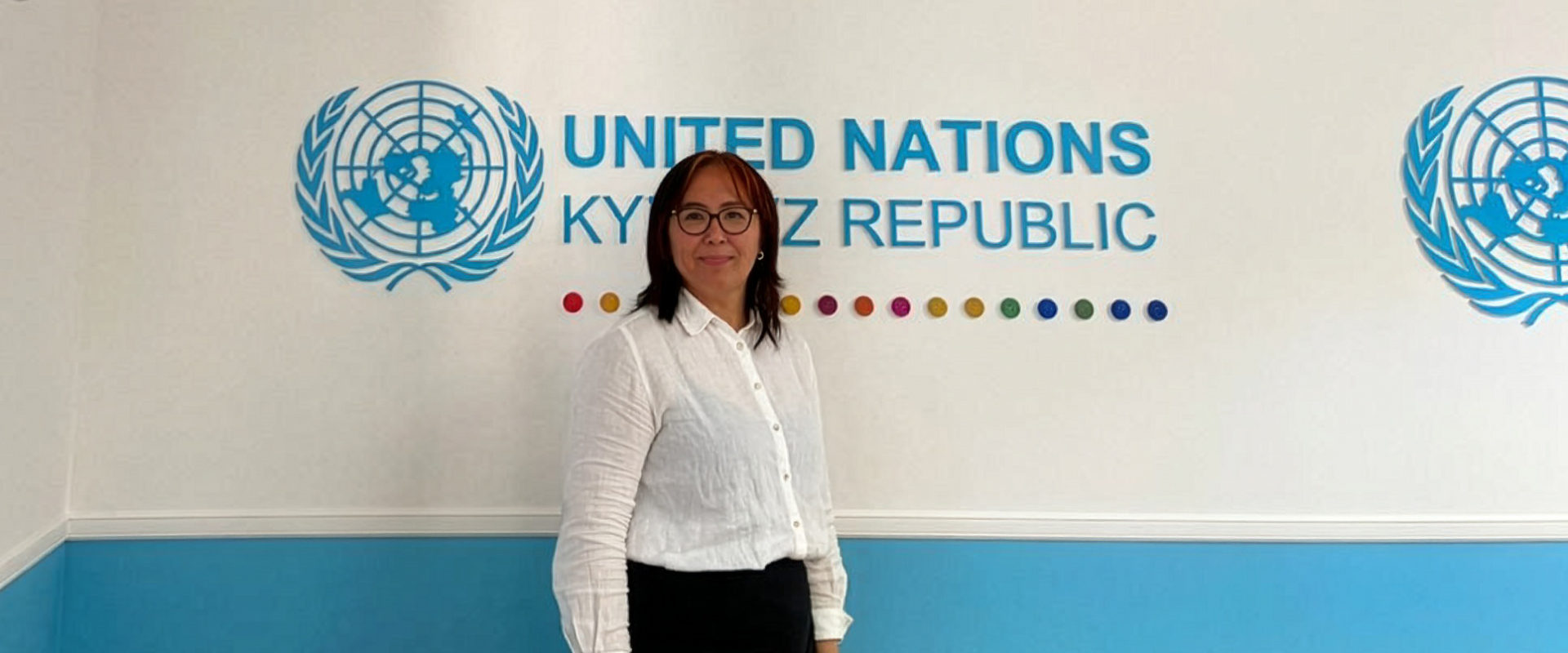
Dildora Khamidova is a gender, peace, and climate resilience practitioner born and raised in Osh, Kyrgyzstan. Her studies at the Geneva Graduate Institute and her work with the United Nations have exemplified her ever-growing commitment to cooperation, inclusion, and long-term stability in the region. As Head of the UN Women Field Office in Osh, she is advancing initiatives that connect peacebuilding, gender equality, and climate security across communities in southern Kyrgyzstan.
I grew up in a multicultural environment where there were several languages, histories, and identities around me, which taught me how layered identity can be, and how much peaceful coexistence depends on empathy, trust, and resilience.
Southern Kyrgyzstan is a region defined by strong traditions and, at times, restrictive social norms. My own lived experience of gender and age-based discrimination made these issues more than theoretical. When I became Head of the UN Women Field Office in Osh, I encountered preconceived notions regarding the roles and capabilities of women, particularly those from minority communities. Over time, I saw how consistent leadership, integrity, and professionalism could shift those perceptions.
In this role, I have led initiatives that integrate peacebuilding, gender equality, and climate security. My work stimulated a deeper study of the growing tendency of climate change and gender vulnerabilities in the Fergana Valley to better understand current trends, social developments, and targeted programming for vulnerable girls and women in climate adaptation measures. We brought together women, young people, and local leaders and created space for dialogue, cooperation, and new forms of community leadership to jointly discuss the gender, peace, and climate nexus. This exemplified how local change rooted in trust and inclusion can ripple into policy and practice. These experiences have shaped my career and purpose, teaching me that building peace and resilience requires elevating the voices of those often unheard, especially women and minority groups. They have inspired me to keep growing as a leader who bridges local realities with global solutions. My journey is ongoing, each step preparing me for the next, and the DPP programme was part of that trajectory, expanding my impact and deepening my ability to connect gender, peace, and climate resilience in more meaningful ways.
One concrete example of gender-responsive intervention was the organization of the National Dialogue with the participation of high-level officials and women working on climate and gender issues. During the Dialogue Platform, women highlighted the lack of gender considerations in climate adaptation policies. In response, our project worked with local communities to pilot gender-sensitive climate resilience initiatives. These efforts focused on three areas: ensuring women’s involvement in decision-making on natural resource management, integrating gender needs into local environmental planning, and improving water and sanitation systems in conflict-affected and environmentally vulnerable regions. Through advocacy and technical support, we also encouraged local authorities to mainstream gender in environmental policies and development plans. The impact was notable: women and community members reported feeling more heard, more willing to collaborate with local self-governments, and more supported in adapting to climate-related challenges. This experience showed how meaningful participation and targeted capacity-building can shift both local governance practices and community confidence.
To me, meaningful peacebuilding and gender-responsive climate policy begin with recognising that exclusion is one of the deepest sources of insecurity in fragile contexts. In regions like the Fergana Valley, where historical grievances, patriarchal traditions, and environmental stress intersect, peace cannot be sustained unless women, especially minority women, are fully included in shaping solutions.
Meaningful peacebuilding is participatory, locally rooted, and intersectional. It creates space for those pushed to the margins to articulate their priorities and shape their communities’ future. For me, this means equipping young women with the skills, confidence, and platforms to engage in conflict resolution, community dialogue, and local governance, and designing reconciliation strategies that integrate gender-sensitive approaches and acknowledge women’s specific vulnerabilities and strengths.
Gender-responsive climate policy must shift decision-making power. Women are often the first to experience environmental stress, yet the last to be consulted. A responsive approach sees women as agents of resilience and ensures their leadership in natural resource management, climate adaptation planning, and community preparedness.
Drawing on my experiences seeing women excluded from peace and climate decision-making, I believe that both peacebuilding and climate resilience are most effective when they reflect lived realities. This is why I implement grassroots initiatives that bring young women into civic dialogue while also contributing to national policymaking through evidence-based, inclusive strategies.
My advice to future DPP participants is to approach their work with deep respect for local knowledge. Technical skills matter, but so do listening, building trust, and understanding social dynamics. Be prepared for resistance, especially in conservative or conflict-affected settings, but let evidence, coalition-building, and community partnerships guide your advocacy.
The DPP network offers a powerful platform to exchange ideas, challenge assumptions, and strengthen your practice. Use it fully. The relationships you build and the insights you gain will help you contribute to a more just, peaceful, and inclusive world.
Interview conducted by Vrinda Kapoor.