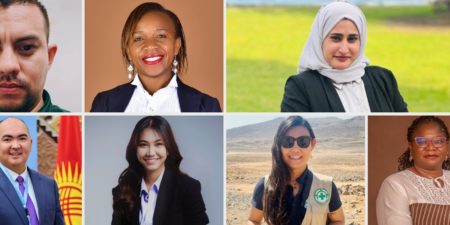

Meron Debebe Getachew is a development professional with over 13 years of experience working at the intersection of humanitarian action, development policy, and resilience building. She previously worked with the Embassy of Switzerland through the Swiss Agency for Development and Cooperation (SDC) in Ethiopia, where she researched the localisation of humanitarian aid as part of the Executive Programme in Development Policies and Practices (DPP) at the Geneva Graduate Institute. She currently works with UNDP Ethiopia, contributing to initiatives that strengthen linkages between humanitarian, development and peace approaches to support durable solutions for displacement-affected communities.
In this interview, Meron shares reflections based on her professional experience and academic research. The views expressed are her own and do not necessarily represent those of UNDP or the United Nations.
My interest in localisation grew from my professional experience within Ethiopia’s humanitarian and development system, where I addressed power imbalances in aid systems. During my time supporting donor-funded programmes with SDC, I often observed the important role that national and local organisations play in responding to crises. These actors are closely connected to the communities they serve and often possess strong contextual knowledge that can support effective responses.
These experiences encouraged me to explore the topic further during my studies at the Graduate Institute in Geneva. My research examined how global commitments on localisation are translated into practice in Ethiopia.
The study highlighted that localisation has become an important theme in international humanitarian policy discussions, particularly following commitments under the Grand Bargain. Ethiopia has taken steps to strengthen the participation of national organisations within the humanitarian system, including policy and legal reforms that allow greater engagement in response efforts. At the same time, translating these commitments into practice requires continued collaboration among governments, donors, international organisations, and national partners.
What continues to motivate my work is the understanding that effective humanitarian and development responses depend on strong partnerships. Supporting national institutions and local organisations to contribute meaningfully to planning and implementation can help ensure that responses are better aligned with local contexts and priorities.
Translating policy commitments into tangible results requires linking national frameworks with the realities of communities affected by displacement. In practice, this involves working with government institutions, development partners, and local stakeholders to align humanitarian and development responses.
In displacement-affected areas, the programme increasingly adopts area-based approaches that address the needs of both displaced populations and host communities. These initiatives may include livelihood opportunities, climate-resilient infrastructure, and improved access to essential services. By supporting both groups, such approaches aim to strengthen resilience and social cohesion at the local level.
Measuring impact is central to translating commitments into action. In practice, partners work with government institutions to define indicators that track progress toward durable solutions, including improved livelihoods, better access to services, and the inclusion of displaced populations in local development planning. These help to monitor progress and provide evidence to inform planning and programming decisions.
Durable solutions ultimately depend on national leadership. Strengthening coordination mechanisms and supporting the integration of displacement considerations into development planning are, therefore, important steps toward sustainable outcomes for affected communities.
Strengthening the role of local actors requires continued collaboration and gradual adjustments within humanitarian and development systems. Current global discussions about the future of humanitarian action, sometimes described as a humanitarian “reset,” provide an opportunity to reflect on how responses can become more efficient, inclusive, and locally informed.
Local organisations often maintain close relationships with communities and can contribute valuable knowledge to programme design and implementation. Supporting their participation in coordination platforms and strategic discussions can help ensure that responses reflect local realities and priorities.
Funding approaches are key. Expanding opportunities for national organisations to access resources and participate in programme design fosters balanced partnerships that combine local knowledge with international experience, while continued investment in institutional capacity and long-term collaboration strengthen their ability to engage effectively in coordination, planning, and implementation.
The DPP programme offered an important opportunity to reflect on development challenges from a broader perspective. One of the most valuable lessons was the importance of systems thinking. Issues such as displacement and climate vulnerability are interconnected and require coordinated responses that link policy frameworks, institutional capacity, and community-level action.
Another key insight was the value of evidence-informed dialogue. Engaging with practitioners from different institutions demonstrated how global policy commitments can be interpreted differently across contexts. Understanding these perspectives is helpful when working to translate policy discussions into practical solutions.
An equally valuable aspect of the programme was the opportunity to learn from peers and practitioners from diverse professional and regional backgrounds. Learning exchanges in Ghana and discussions in Geneva provided space to share experiences, explore different development approaches, and build professional networks. These interactions often continued beyond the classroom and created opportunities to reflect on how similar challenges are addressed in different settings.
These experiences continue to shape my professional approach and reinforce the importance of collaboration, learning, and locally grounded solutions in addressing complex development challenges.
Interview conducted by Vrinda Kapoor